


What to Write in Your Garden Journal Before Summer Ends
- Cori Schutlz
- 8 hours ago
- 4 min read

Late summer has a way of making a garden feel both abundant and unfinished. Tomatoes are still ripening. Herbs are leaning over their borders. A few plants are thriving, a few are tired, and at least one corner is probably doing something you did not plan.
This is also the moment when many gardeners look at a nearly empty journal and decide they have already missed their chance.
You have not.
A useful garden journal does not need a perfect record of every seed, rainfall, feeding, and harvest. It only needs to preserve the details that will help you understand this season and make kinder, wiser choices next time. If you have not written anything since spring, or if you never began at all, start with what is visible now.

Start with a walk, not a blank page
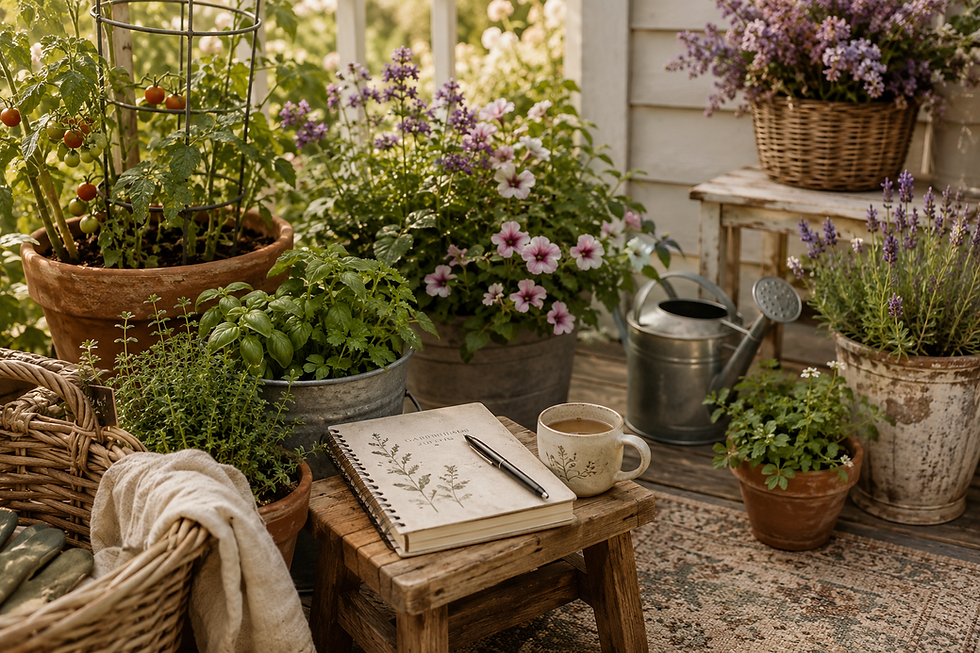
Before you sit down to write, take a slow walk through the space you actually tended. That may be a large vegetable garden, three containers on a balcony, a windowsill full of herbs, or one stubborn tomato plant beside the porch.
Do not begin by asking what you should have tracked. Ask what you notice.
Which plant pulls your eye first? Where does the garden feel generous? Where does it feel crowded, dry, shaded, neglected, or unexpectedly alive? A ten-minute walk will usually give you more useful material than trying to rebuild four months from memory.
Seven garden details worth recording
1. What grew well
Write down the plants that handled your real conditions, not the conditions you hoped to provide. Note which varieties produced reliably, recovered after stress, resisted common problems, or simply made you happy every time you saw them.
“The cherry tomato by the south fence kept producing through the hottest weeks” is more useful than “tomatoes did well.”
2. What struggled, and what may have contributed
You do not need to diagnose every problem. Record what you observed and separate observation from guesswork.
Observed: lower leaves developed dark spots after several wet weeks.
Possible factor: poor airflow or soil splashing onto foliage.
Next step: check local Extension guidance before planting next year.
This keeps your journal honest without turning uncertainty into fact.
3. Where light, water, and space behaved differently than expected
Gardens reveal their true patterns slowly. A bed that looked sunny in April may be shaded by midsummer growth. One container may dry twice as quickly as the others. A path may be too narrow once plants spill over its edges.
Record the practical surprises. They will matter when you decide where to plant, what to move, and how much room to leave.
4. What you actually used
A productive plant is not automatically a useful plant. Which herbs made it into your meals? Which vegetables were eaten, shared, frozen, or preserved? Which harvest sat on the counter until it was no longer appealing?
There is no shame in discovering that your household needs less zucchini and more basil. The point is not to prove abundance. It is to grow what belongs in your life.
5. What brought you back outside
Garden records often focus on output, but the emotional details matter too. Perhaps you checked the beans every morning because the ritual steadied you. Perhaps the wildflowers brought more pleasure than the carefully planned border. Perhaps a chair in the shade became as important as any planting.
Write down what helped the garden feel livable.
6. One sensory memory
What did this season smell, sound, or feel like?
Record the scent of tomato leaves on your hands, the weight of the first blackberry, the sound of bees in the thyme, or the way the garden looked just before evening rain. These details may not change a planting plan, but they preserve the part of a garden that measurements cannot hold.
7. One thing to repeat, one thing to change, and one thing to release
End with three simple sentences:
Next year, I want to repeat…
Next year, I want to change…
I am willing to release…
The final sentence matters. Not every unfinished idea needs to become a task for next year.

If you missed most of the season
Do not punish yourself by creating a fictional record. Use approximate language when needed: “planted in late May,” “began harvesting around the middle of July,” or “struggled after the hottest stretch.”
You can also use evidence already around you: photographs on your phone; seed packets or plant tags; purchase receipts; messages where you shared a first harvest; calendar notes; and the plants themselves.
Reconstruct only what will be useful. A garden journal is a tool, not a test you can fail.
Give the season one honest page
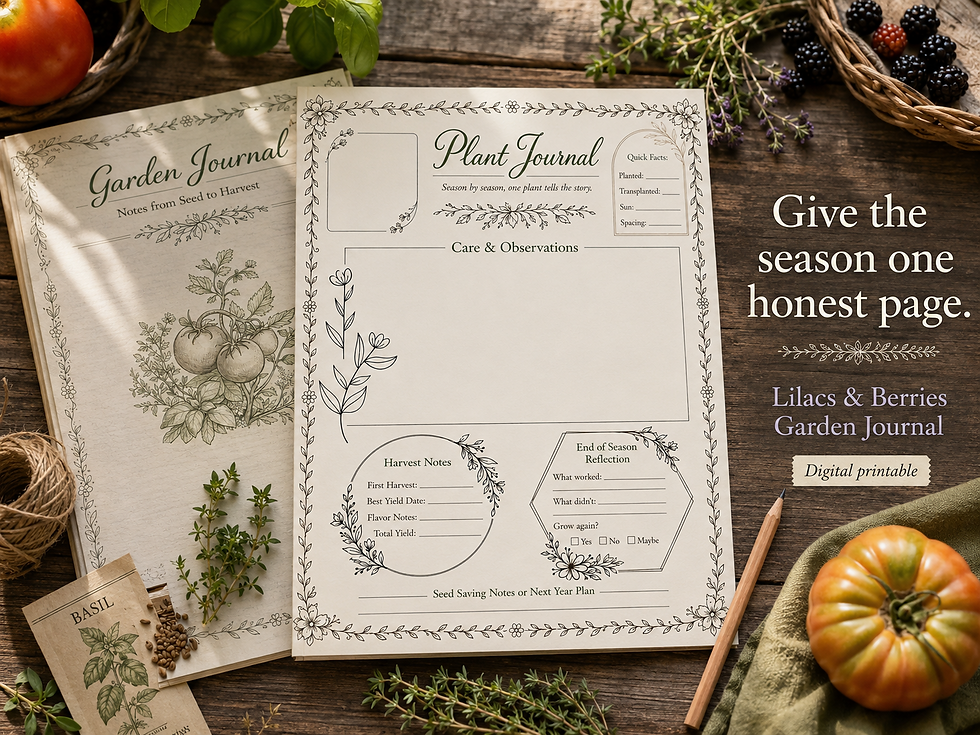
If you want a practical place to keep plant details, care notes, observations, and next-season ideas, the Garden Journal is designed for that work.
If you need broader planning pages for the homestead and garden, use the Homestead Planner Pack.
And if you want help deciding what needs attention as the season turns, download the Seasonal Garden Checklist.
You do not need to capture the whole summer. Begin with the detail you are most afraid you will forget. Let that be enough for today.


Comments