


How to Use a Seasonal Garden Checklist Without Feeling Overwhelmed


Garden planning can feel overwhelming when every season seems to arrive with a dozen little tasks asking for your attention.
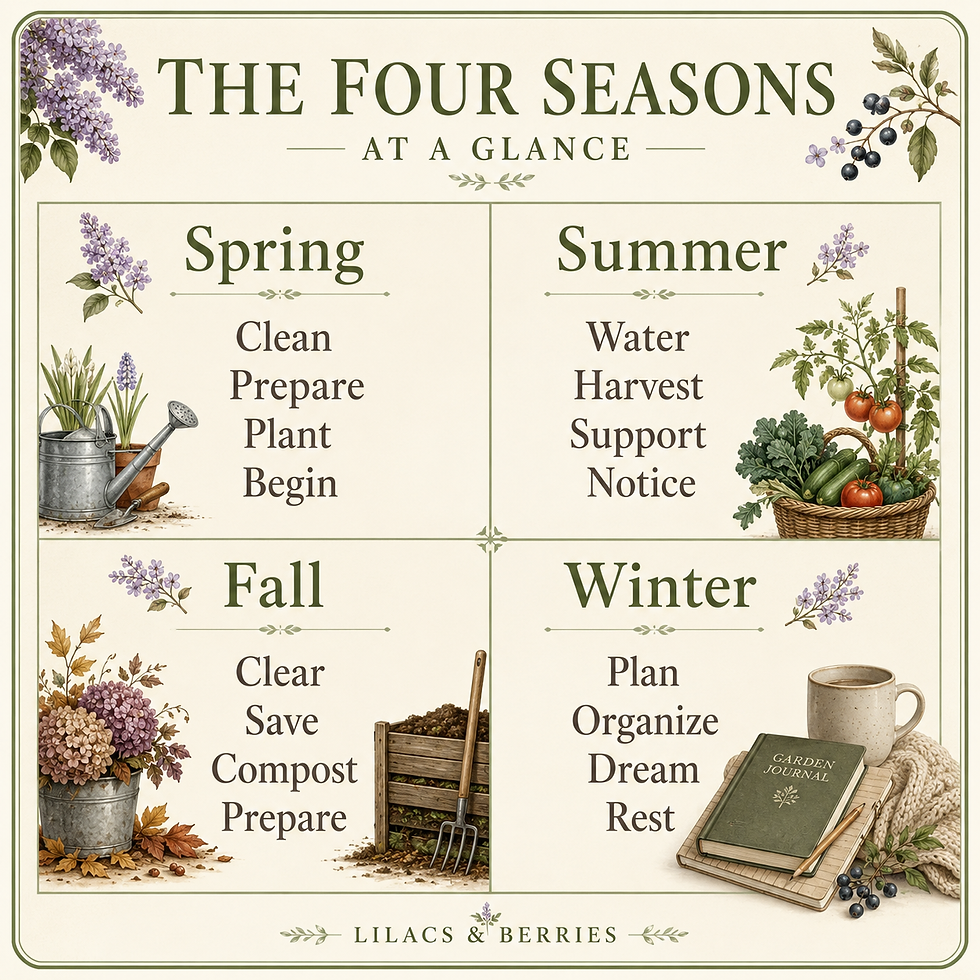
Spring asks you to clean, prepare, plant, and begin again. Summer asks you to water, harvest, prune, and keep an eye on pests. Fall brings cleanup, seed saving, bulbs, compost, and preparation. Winter may look quiet from the outside, but it often becomes the season of planning, organizing, dreaming, and wondering what to do differently next year.
It is easy to feel like you are already behind before you even begin.
But a seasonal garden checklist should not make you feel pressured. It should help you breathe.
A good checklist is not there to prove that you are doing enough. It is there to give you a peaceful place to begin. It helps you notice what matters next, choose one small step, and move through the garden year with a little more confidence.
Whether you have a backyard garden, raised beds, containers on a porch, or a few herbs near the kitchen window, you can use a seasonal garden checklist in a way that feels simple, useful, and kind.
No perfect garden required.
What Is a Seasonal Garden Checklist?

A seasonal garden checklist is a simple guide that breaks garden tasks into the rhythm of the year.
Instead of trying to remember every garden task all at once, you can look at the season you are currently in and focus only on what matters now.
In spring, your checklist may include garden cleanup, soil preparation, seed starting, planting, and early pest checks.
In summer, the focus may shift to watering, harvesting, plant support, weeding, and keeping your garden healthy through heat and growth.
In fall, the garden begins to slow down. This season often includes cleanup, compost, seed saving, bulb planting, preserving herbs, and noting what worked well.
In winter, the garden may rest, but the gardener can plan. Winter is a lovely time to organize seeds, review garden notes, clean tools, sketch layouts, and dream gently about the next growing season.
A seasonal checklist helps you stop carrying the whole garden year in your head.
You only need to ask, “What season am I in, and what is the next small thing I can tend?”
Why Garden Checklists Can Feel Overwhelming

Checklists are meant to help, but sometimes they can accidentally feel like one more thing to keep up with.
This is especially true when you look at a full page of tasks and feel like every unchecked box means you are falling behind.
Maybe you look at a spring checklist and think you have to clean every bed, start every seed, test your soil, sharpen your tools, mulch everything, and plan your entire garden in one weekend.
Maybe you have a small container garden and feel discouraged because some of the tasks seem meant for a much larger space.
Maybe your life is full. You have work, family, meals, appointments, errands, caregiving, or simply a tired body that does not always have the energy the garden seems to ask for.
If that is you, take a breath.
The checklist is a menu, not a mandate.
You do not have to complete every task. You do not have to use it the same way another gardener uses it. You do not have to make your garden match someone else’s season, climate, space, schedule, or energy.
A seasonal garden checklist is most helpful when it becomes a gentle guide instead of a strict rulebook.
Step One: Start With the Season You Are In
The easiest way to use a seasonal garden checklist is to begin exactly where you are.
Do not start by reading every page if that feels like too much. Do not worry about what you missed last month. Do not jump ahead and try to solve next season before this one has even settled.
Just turn to the season you are living in right now.
If it is spring, focus on preparation, planting, soil care, and early growth.
If it is summer, focus on watering, harvesting, supporting plants, and watching for pests.
If it is fall, focus on cleanup, compost, seed saving, and preparing the garden for rest.
If it is winter, focus on planning, organizing, tool care, and reviewing what you learned.
Begin where you are.
That little phrase matters in the garden and in life. You are not behind because you are starting today. You are simply entering the rhythm from the place where your feet are planted.
Step Two: Circle Only What Applies to Your Garden

Not every garden task belongs to every garden.
A woman with a few herb pots on her porch does not need the same checklist as someone with six raised beds and a backyard vegetable patch. A flower gardener may skip harvest tasks. A container gardener may not need to divide perennials or prepare large garden beds. A beginner may choose to ignore soil testing for now and simply start with compost, water, and observation.
That is not failure. That is wisdom.
When you look at your seasonal checklist, circle or highlight only the tasks that apply to your actual garden.
Not your dream garden.Not someone else’s garden.Not the garden you hope to have five years from now.
Your garden today.
If a task does not fit your space, skip it. If a task feels too advanced, save it for later. If something does not apply to your climate or your plants, let it go.
A good garden rhythm should support the life you are actually living.
Step Three: Choose Three Tasks, Not the Whole List

This may be the most helpful way to use a garden checklist without feeling overwhelmed.
Choose three tasks.
That is all.
Not ten. Not the whole page. Not every box that looks important.
Just three.
A simple way to choose is to pick one task from each of these areas:
For example, in spring, your three tasks might be:
Clean up dead plant material from one garden bed.Start seeds indoors.Sketch or journal your garden plans.
In summer, your three tasks might be:
Water deeply during a dry spell.Harvest herbs before they flower.Write down what is thriving in the heat.
In fall, your three tasks might be:
Remove diseased plant material.Plant garlic or spring bulbs.Note what grew well this year.
In winter, your three tasks might be:
Organize your seed packets.Clean and sharpen your garden tools.Choose one realistic garden goal for spring.
This three-task method turns a full checklist into a small, peaceful plan.
And small seasonal progress counts.
You are still tending your garden if you only complete one task. You are still learning if you only make one note. You are still growing something meaningful if your garden receives twenty minutes of care instead of an entire day.
Step Four: Make It a Weekly Garden Rhythm

A checklist becomes more useful when it becomes a rhythm, not a rule.
Instead of using your seasonal garden checklist as something you have to “finish,” try using it once a week as a gentle check-in.
You might keep it in your garden binder, on a clipboard, tucked into your planner, or placed near your seed packets. Then choose one day each week to look it over.
Your weekly rhythm might be very simple.
On Monday, glance at the checklist and notice what stands out.
On Tuesday or Wednesday, choose one small garden task.
On Friday or Saturday, take a slow walk through the garden and see what has changed.
On Sunday, write one sentence about what you noticed.
That is enough to build a meaningful garden habit.
Your rhythm does not have to be daily to be useful. It only needs to be something you can return to.
Some weeks, you may complete several tasks. Other weeks, you may only water the herbs and pull one weed on your way back inside. Both count.
The goal is not perfection. The goal is connection.
Step Five: Use the Reflection Section as Your Garden Memory Keeper

It is easy to think the most important part of a checklist is the task section.
But often, the reflection section becomes the most valuable part.
That is where you begin to learn your own garden.
It helps you remember what bloomed first, what struggled, what surprised you, what you planted too late, what you want to grow again, and what you may want to skip next year.
At the end of each season, take a few quiet minutes to answer simple questions:
What grew well?What struggled?What did I enjoy tending?What felt like too much?What do I want to try next season?What do I want to remember for next year?
You do not need long paragraphs. A few honest notes are enough.
“Basil did beautifully in the porch pot.”
“Tomatoes needed more support earlier.”
“Zinnias were worth planting again.”
“Start lettuce sooner next spring.”
“Do not overplant cucumbers.”
These little notes become a gift to your future self.
A seasonal checklist helps you tend the current season. A garden reflection helps you grow wiser for the next one.
A Gentle Example: Using the Checklist in a Busy Week

Imagine it is a full week. You are tired. The house needs attention. The laundry is waiting. The garden is starting to wake up, but you do not have a whole afternoon to spend outside.
On Saturday morning, you make a cup of tea and take your seasonal garden checklist to the kitchen table.
Instead of reading the whole page as a list of demands, you choose three things.
You decide to pull early weeds from one bed, check the soil moisture in your containers, and write down where you want to plant herbs this year.
That is all.
You spend twenty minutes outside. You pull what you can. You notice the soil is still damp from rain. You jot down “basil near kitchen, parsley in pot, thyme by steps.”
Nothing dramatic happens.
But you have tended the season.
You have paid attention. You have made one small plan. You have given your garden a little care and given yourself a little direction.
That is how a garden rhythm is built.
Not all at once. Not in a rush. Not through guilt.
One small rooted step at a time.
What Not to Do With a Garden Checklist
A garden checklist should never become something that makes you feel ashamed of your garden.
Here are a few things you do not need to do.
You do not need to treat it like a test.
You do not need to complete every box.
You do not need to compare your progress to someone with more time, space, money, experience, or energy.
You do not need to finish the whole season in one weekend.
You do not need to feel guilty about the tasks that remain undone.
Unchecked boxes are not proof that you failed. They are simply reminders waiting for the right time.
Some tasks will not apply this year. Some will matter later. Some may never belong to your garden at all.
Let the checklist serve you. Do not let it scold you.
A Softer Way to Stay Organized in the Garden

The Lilacs & Berries way of garden planning is simple:
Start where you are.Choose what applies.Take one small step.Write down what you learn.Let the season teach you.
When you use a seasonal garden checklist this way, it becomes more than a to-do list. It becomes a gentle rhythm for noticing, tending, planning, and remembering.
You begin to see your garden as something you are in relationship with, not something you have to control perfectly.
The garden will always have weeds. Weather will always change your plans. Some seeds will thrive, and others will not. Some weeks will be full and messy. Some seasons will teach you through mistakes.
That is part of the beauty.
You are allowed to grow slowly, too.
Download the Free Seasonal Garden Checklist
Want a softer way to keep track of your garden tasks through the year?
The Seasonal Garden Checklist is a free printable guide with one page for each season: spring, summer, fall, and winter. It is designed to help you plan, tend, harvest, reflect, and prepare without feeling overwhelmed.
Use it as a gentle guide, a garden binder page, a weekly planning tool, or a seasonal reset ritual.
Download the Free Seasonal Garden Checklist and begin with one small rooted step today.
A Rooted Garden Grows One Small Step at a Time
You do not need to hold the whole garden year in your head.
You only need a peaceful place to begin, a few simple notes, and one small task you can tend today.
Season by season, your garden will teach you what comes next.
And with a gentle checklist beside you, you can meet each season with a little more calm, a little more confidence, and a little more beauty rooted into your everyday life.


Comments